The right risk management tools help organizations stay compliant, improve decision-making, and reduce costly errors. This guide explores the top seven tools and how they can transform your approach to risk management.
14 Sep 2025
Featured Checklist
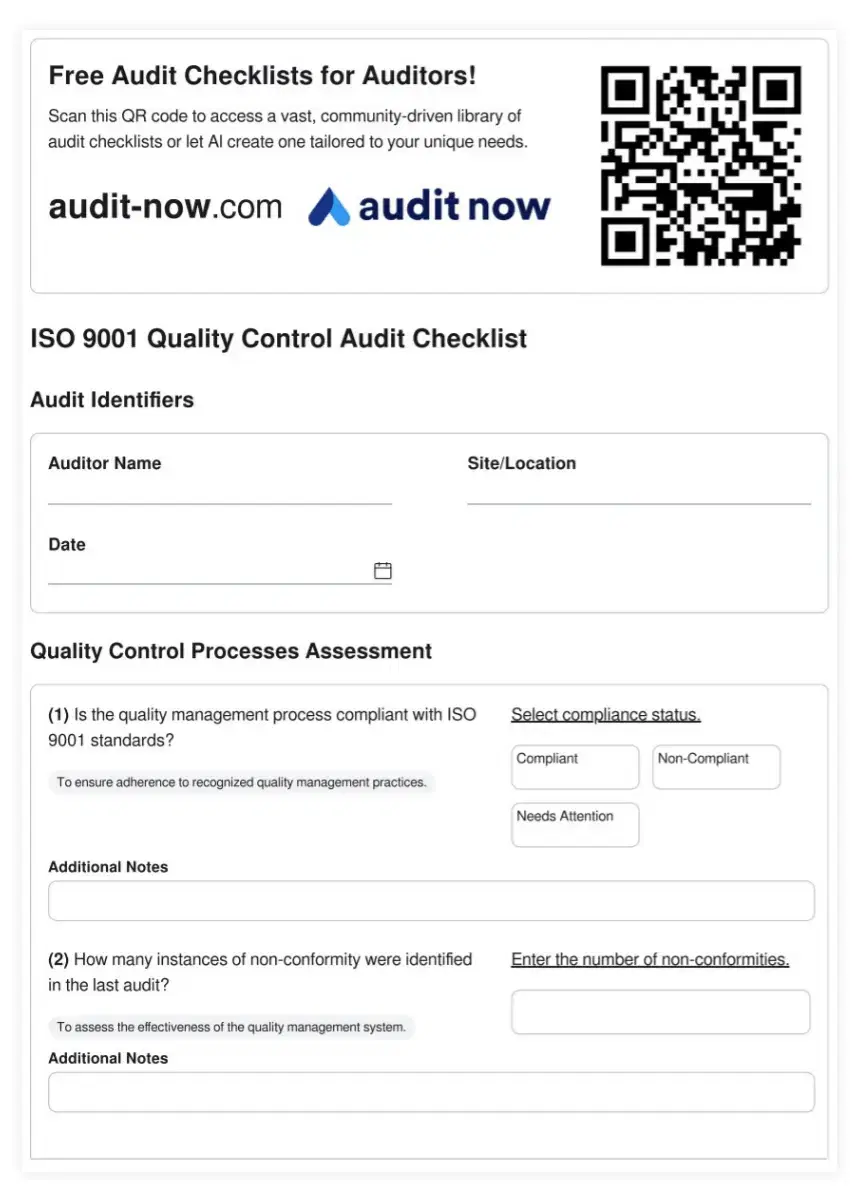
Risk Management Assessment Checklist
In the manufacturing industry, effective risk management is crucial for maintaining operational continuity and ensuring safety. The Risk Management Assessment Checklist serves as a vital tool for auditors and manufacturing professionals to evaluate their risk management practices against Lean principles. By systematically reviewing risk identification, assessment, and mitigation strategies, this checklist helps organizations identify areas for improvement and ensure that risk management aligns with overall operational goals. Utilizing this checklist can lead to enhanced safety, reduced operational disruptions, and improved compliance with regulatory standards.
Risk management is no longer optional. It’s essential for every organization.
Companies must use reliable risk management tools to stay compliant. They also need to stay secure with increasing regulations and threats. These tools help teams identify risks, track them. They can also take corrective actions before issues escalate.
This guide explores the top 7 risk management tools in 2025. It will highlight their features, benefits. I will also focus on why they matter.
Risk management tools are software solutions helping organizations to identify, analyze risk. The next step is to reduce the risks. They cover a wide range of tasks such as compliance tracking audit reporting.
Without them, risk management often becomes a manual, paper-heavy process. The process leaves room for errors. By using digital tools, businesses can:
The risk landscape has changed. Organizations deal with cyber threats, supply chain disruptions, and new compliance regulations. A single mistake can lead to legal penalties, financial loss, or reputational damage.
In 2025, risk management tools are more than compliance helpers. They are business enablers that:
Choosing the right risk management tool depends on your industry. A practical way to approach selection is:
Choosing the right risk management tool isn’t just about having software in place. It’s about ensuring the tool has the right features to support long-term success. Organizations today face complex regulations, multi-layered risks. The growing demands for transparency is another factor.
A strong tool can make a difference in taking action. A normal software simply detects risk. But a strong one can actually prevent them from escalating.
Features such as real-time reporting ensure decision-makers can act immediately. So, they don’t need to wait for quarterly reviews.
Customizable templates allow teams to adapt audits and assessments to their specific industry. They are beneficial across all the industries.
Automated action tracking ensures that identified issues don’t get lost in emails. But they are assigned, monitored, and completed on time.
Equally important are collaboration features that bring all staff together in one system.
Mobile functionality helps teams capture inspections on the go. AI-driven insights identify patterns that might otherwise go unnoticed.
Leverage real-time reporting, AI-driven insights, and customizable templates to streamline audits, track actions.
Start Now
When organizations use effective risk management software, they have:
These benefits make risk management tools essential for business resilience and growth in 2025.
Audit Now is an all-in-one platform. It helps organizations move away from outdated paper checklists. It combines AI with ready-made templates, making risk management practical and efficient.
Audit Now is not just about identifying risks. It helps turn findings into actions. Managers can assign tasks, set deadlines, and track progress from a single dashboard. This ensures that no issue is left unresolved.
It works across industries. The industries include healthcare, manufacturing, retail, logistics, finance, and food & beverage.
Companies use Audit Now to save time, reduce compliance costs. They also use it to maintain consistent quality across all operations.
Resolver focuses on enterprise risk management and compliance reporting. It offers workflow automation, incident tracking, and dashboards for executives. This tool is useful for companies that want detailed reporting and board-level insights.
MetricStream is a leading GRC (Governance, Risk, and Compliance) solution. It provides strong features for risk analysis, regulatory compliance, and internal audits. It is often used by large enterprises that deal with multiple global regulations.
LogicGate is known for its customizable workflows. It allows teams to design their own risk management processes. It integrates with third-party tools. Its drag-and-drop interface makes it easier for non-technical users to adopt.
StandardFusion offers risk tracking and compliance management in one platform. It supports ISO, SOC 2, HIPAA, and other frameworks. Its strength lies in audit readiness. It gives organizations a clear view of compliance gaps.
MasterControl is widely used in life sciences, especially for FDA-regulated environments. It focuses on document management, audit trails, and compliance with GMP requirements. For companies in healthcare and pharmaceuticals, it’s a strong choice.
ZenGRC provides risk visibility across IT and cybersecurity operations. It is often used for continuous monitoring of vulnerabilities, controls, and compliance checks. Its integrations make it a good fit for IT-heavy organizations.
Risk management in 2025 demands more than spreadsheets and manual reporting. Tools like Audit Now lead the way by combining AI, ready-made templates, and actionable workflows. They help organizations not only stay compliant but also build trust, save time, and improve operations.
If you want a solution that adapts to your industry and simplifies compliance, Audit Now is the tool to start with. It transforms risk management from a burden into a strategic advantage.
Audit Best Practices: Learn More
What Does a Restaurant Manager Do? Key Responsibilities and Best Practices
The Complete Guide to Restaurant Inventory Management in 2025
